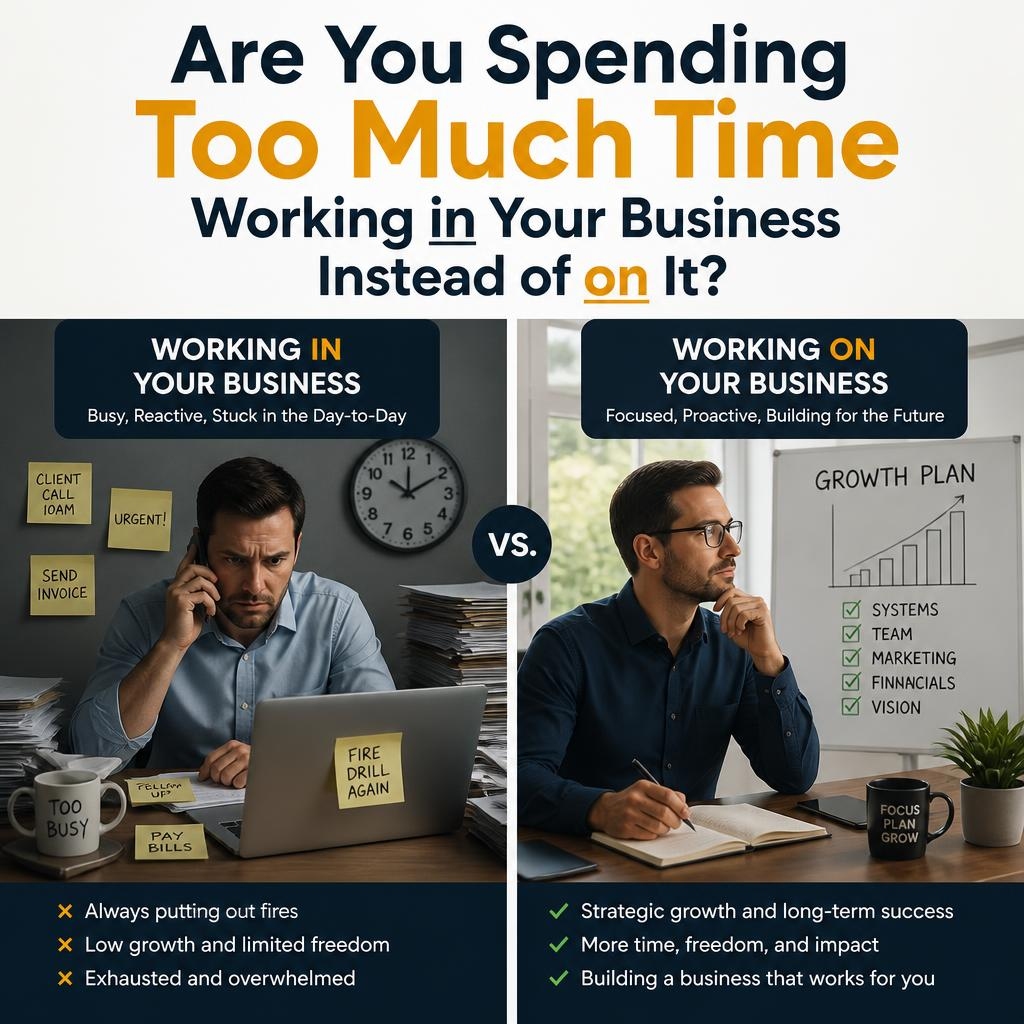
Are You Spending Too Much Time Working in Your Business Instead of on It?
Running a business can easily turn into a never-ending list of small responsibilities. You’re answering emails, dealing with customers, checking orders, sorting out paperwork, and solving problems that seem to appear out of nowhere. By the end of the day, you’re exhausted, but the plans you had for growing the business haven’t moved forward.
This is a common trap for business owners. Doing everything yourself might have made sense when you first started, but as the company grows, it can hold you back.
There’s a big difference between working in your business and working on it. The first involves handling everyday operations, while the second means focusing on strategy, growth, and finding better ways to run the company.
Both matter, but finding the right balance is essential.
Why Business Owners Get Stuck in Daily Tasks
It usually happens without you noticing. You become used to handling customer questions, checking every order, and making decisions because you know the business better than anyone else.
Delegating can feel risky, especially when you worry that someone else won’t meet your standards. But if every small decision needs your approval, employees become dependent on you and work starts slowing down.
Constantly dealing with urgent problems makes things worse. Marketing plans, new ideas, and improvements keep getting postponed because there’s always something more immediate to handle.
Signs You Need to Change Your Approach
You might be spending too much time on daily operations if:
- You rarely have time to plan for the future.
- Employees come to you for even minor decisions.
- Important projects keep getting pushed aside.
- You regularly work longer hours than your team.
- Taking a few days off feels almost impossible.
- Your business isn’t improving despite all the effort you put in.
If several of these sound familiar, it’s worth looking at how you’re spending your time.
Start Delegating and Building Better Systems
You don’t have to handle every responsibility personally. Routine activities such as order processing, scheduling, basic customer enquiries, and administrative work can often be delegated.
The key is giving employees clear instructions and enough authority to complete tasks independently.
Simple systems can help, too. Create checklists for repetitive activities, document important procedures, and make sure everyone understands their responsibilities. Business owners looking for practical examples of better management processes can take a look at the site here for additional ideas and useful resources.
You can also use tools such as accounting software, customer management systems, and email automation to reduce manual work.
Make Time for Business Growth
Once you’ve freed up some time, use it to focus on the bigger picture.
Review your finances, look for ways to improve profitability, explore new opportunities, and think about what your customers might need next.
Set aside a few hours every week for strategic work. Treat that time like an important appointment rather than something you’ll get around to when everything else is finished.
Try a Simple 30-Day Plan
Start by tracking how you spend your working hours for one week. Identify three repetitive tasks that don’t require your personal involvement.
During the second week, delegate some of those responsibilities. In the third week, introduce clearer procedures or automation. By the fourth week, use the time you’ve gained to work on a business improvement project.
You don’t need to change everything overnight. Small adjustments can gradually give you more control over your schedule.
Conclusion
Being busy doesn’t always mean your business is moving forward. If most of your time goes into handling everyday tasks, you may be leaving too little room for the decisions that create long-term growth. Learn to delegate, build reliable systems, and give your team more responsibility. Most importantly, make time to work on your business instead of constantly working inside it. The goal is to build a company that doesn’t depend on you being involved in every little thing to keep running successfully.